Best guess on when business travel will recover? It could be years
Advertisement
Experiences
Best estimate on when business travel will recover? It could exist years
The full general consensus is that it will take two to three years – simply some analysts are predicting upward to seven years, if not longer, for full recovery.
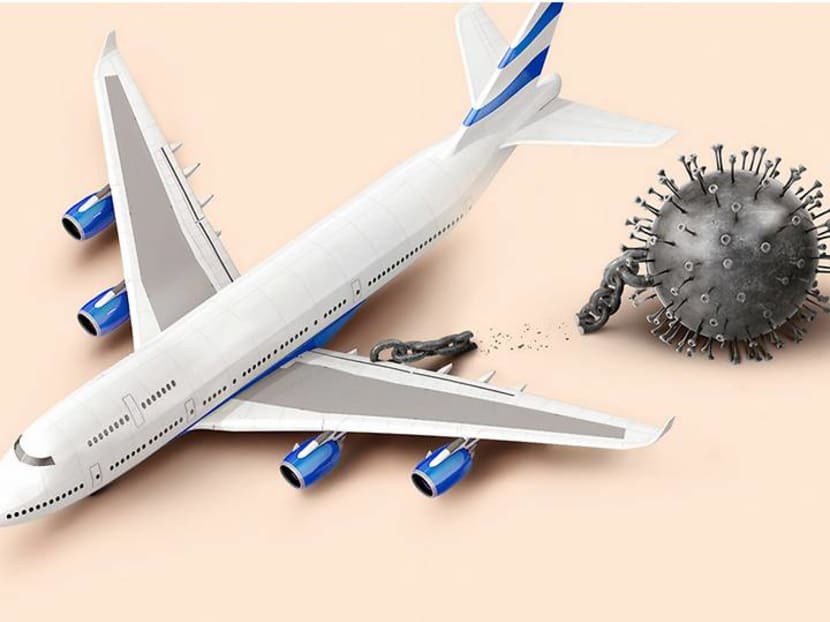
Two to iii years may be too optimistic – at least for a recovery by the major airlines, say analysts. (Photo: Unsplash)
While concern travel evaporated in a flash when the coronavirus hitting, information technology may take two to 3 years for information technology to fully recover – far longer than many travel experts initially predicted.
Fifty-fifty that timeline, said Henry Harteveldt, president of Atmosphere Enquiry Grouping, a travel marketplace research business firm in San Francisco, depends on "the broader economy, the manufacture a business firm operates in and demand for its products or services, as well every bit the public health environment."
And two to three years may exist also optimistic – at least for a recovery by the major airlines.
Michael Derchin, an airline analyst, described the effect of the coronavirus pandemic on carriers every bit "Sept. xi and the Great Recession on steroids." He estimated that it could take airlines seven years, if non longer, to recover.
While business travellers make up about x per cent of all passengers on the major airlines – including American, Delta, United, Lufthansa and Singapore – they generate one-half the airlines' revenue, Derchin said. And Harteveldt estimated that business travellers were responsible for 55 per cent to 75 per cent of major airlines' profits worldwide. Not only do business travellers buy more expensive and profitable tickets, they are likewise more probable to hold airline credit cards and buy airport lounge memberships, among other services.
READ> How the airline manufacture is preparing for changes in post-pandemic travel
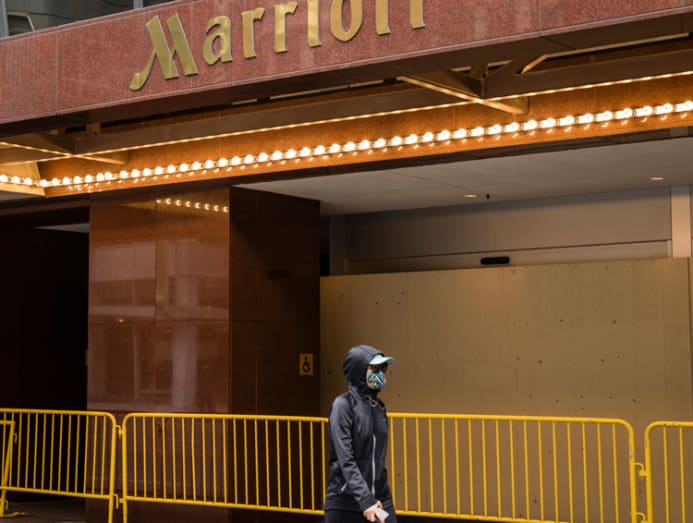
As for hotels, business travellers generate about 70 per cent of Marriott's and Hilton's global revenues, said Robin Farley, lodging annotator at UBS. She predicted that the mutual measure of hotels' fiscal health, acquirement per available room, would non return to 2022 levels until 2023 or 2024.
Michael Bellisario, lodging analyst for financial services firm Baird, as well doesn't run into revenue per available room recovering until 2023 at the primeval, he said. He added that he believed that large, urban US markets, which generally incorporate bigger, more profitable hotels, would lag behind smaller ones.
Marriott is seeing a irksome render of domestic bookings, though many are by leisure travellers in vacation destinations. It said nigh 70 per cent of its corporate clients worldwide were expected to ease or lift restrictions on employee travel inside the next three months.
The car rental manufacture is perhaps the brightest spot among travel suppliers. The average length of business travel rentals at Enterprise, National and Alamo has risen recently, said Donald Moore, senior vice president of business organisation rental sales and global corporate accounts at Enterprise Holdings, the brands' parent visitor.
Some business travellers are keeping cars upwardly to seven days, compared with less than 3 days before the pandemic. They are driving distances – like from St Louis to Chicago – that they previously flew, Moore said.
Recent polls also raise questions about the timing of a rebound in business organization travel and its possible replacement by virtual meeting platforms.
In a survey past Institutional Investor mag concluding month, more than half of the chief information officers, portfolio managers and other investment decision-makers said they did not expect to travel once more until November and December, at the primeval. And 93 per cent of the more than than 300 global companies surveyed in May by the BCG Henderson Plant, the research system of the Boston Consulting Group, expected to permanently change "remote working and meeting policies," while 66 per cent anticipated permanently changing travel policies.
Typical of the people who would ordinarily be travelling for work merely are not is Erin Eckert, director of the infectious-affliction portfolio at the nonprofit organisation RTI International in Washington. Earlier the pandemic, she spent nigh a quarter of her time travelling for malaria-related research across Africa. Now she is grounded indefinitely, working out of her home.
And so there are self-employed business travellers whose visits to clients' offices take been suspended, like Paul Grizzell, an organisational consultant in Woodbury, Minnesota.
Grizzell, who used to spend three weeks each month visiting clients, mostly in the United States, hasn't travelled since late February, he said. Instead, he has been working with clients remotely on Zoom, which, he said, "is not the same as being in a conference room with a team of people, working on a business problem, eating lunch together, catching upwardly on family."
He hopes to resume his domestic business organization trips this summertime and international travel "possibly in December or January," in one case his clients return to their offices.
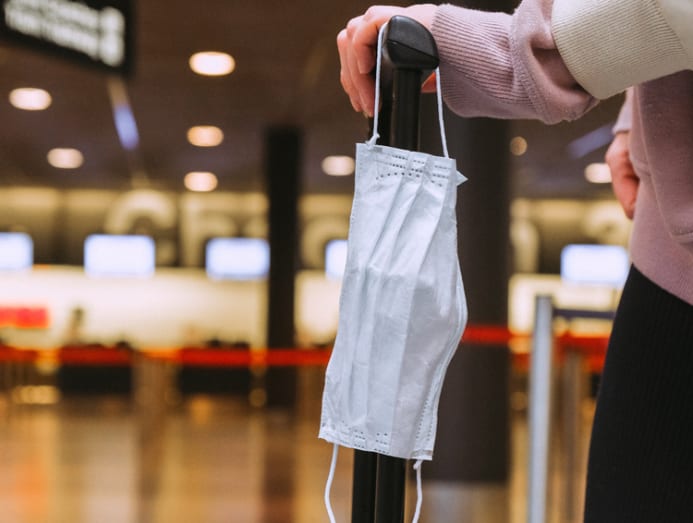
Among the challenges with resuming business travel are the varying guidelines put out by airports and airlines. For companies to be comfortable sending employees on business concern trips, "at that place accept to be somewhat consistent, clearly communicated guidelines," said Mike Janssen, global chief operating officer and global chief commercial officeholder of BCD Travel, a travel management company.
"If I'thou flying to Reno and connecting in Denver," he said, "I may not run into the same rules at each drome, and I don't know what to ready for. I can't make up one's mind if there'due south adventure, which will go along me from wanting to take that trip."
Also potentially dampening business travel is the prospect of a lawsuit if a traveller gets sick. Janssen said he had heard "plenty of talk" about liability waivers that would protect companies from being sued, and they are the source of contend in private states and on Capitol Hill.
"The threat of litigation will potentially forestall some companies – even ones that are going to great lengths to exercise caution and condom protocols – from restarting their travel programs equally quickly as they'd like to," he said.
Similarly, Harteveldt said that until companies were confident about their legal responsibleness to protect the health, safety and well-being of their employees, "they won't want to take the responsibility and risk of sending them back on the road."
Companies, he said, "will need to feel confident it will exist like shooting fish in a barrel to travel to a destination; that there'due south a safety, clean and salubrious surroundings created by airlines and airports; that accommodations are safe; and that employees tin can chop-chop return home if there's a spike in the disease or a shutdown at either end."
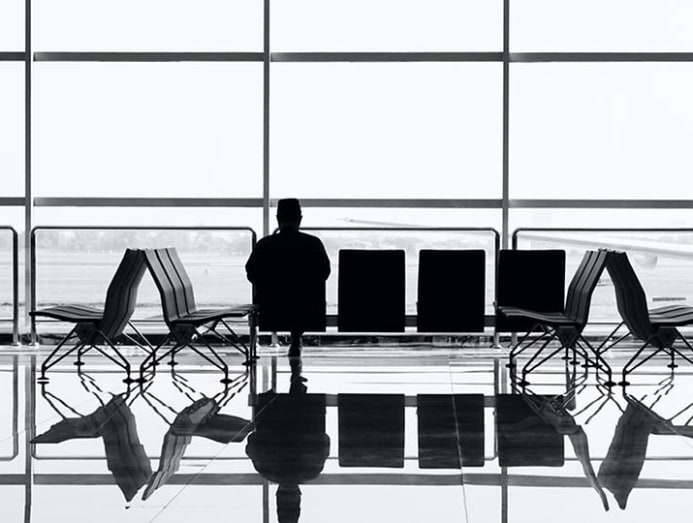
Calculation to the complications for Americans is the European union's determination to bar travellers from the Us, also equally recent decisions by England and Scotland to maintain their 14-day self-quarantine requirement for US travellers, even every bit they ended information technology for dozens of other countries. In the Usa, some states are requiring quarantines for travellers from other states where virus cases are ascent. Chicago imposed similar rules recently.
Michael Premo, chief executive of the Airlines Reporting Corporation, which settles ticket transactions between airlines and travel agencies, said countries' borders would not fully reopen until there were a vaccine and treatment for the virus, also as "more stringent travel protocols."
"Until international travel returns somewhat to normal, it will put a large damper on corporate travel activity," he said.
In the meantime, the concern travel lockdown has an upside for Michael Chang, a wellness care technology consultant in Robertsdale, Alabama.
Chang, who before the pandemic spent five days each week at the University of Texas M.D. Anderson Cancer Center in Houston, has been working from dwelling house since early March and will continue to exercise so at least until the cease of August.
Although he misses seeing colleagues at the heart and accruing frequent flyer miles on Delta Air Lines and loyalty program points at Hilton and Marriott – which he uses toward family vacations – he said working from dwelling house and spending time with his wife and four children "definitely outweighs not getting" the miles and points.
Past Jane L. Levere © 2022 The New York Times
READ> With Zoom meetings, webinars and online programmes, is business travel dead?

Recent Searches
Trending Topics
Source: https://cnalifestyle.channelnewsasia.com/experiences/when-will-business-travel-recover-243536
0 Response to "Best guess on when business travel will recover? It could be years"
Post a Comment